
7 Signs It’s Time to Change Property Management Company – A Strategic Guide for Real-Estate Owners in 2026
In the Dominican Republic many owners are purchasing villas and apartments to rent the property and generate passive income. After handing over the keys to the management company, the owner hopes for peace of mind, but over time begins to notice warning signs. The figures in the reports don’t match the initial promises, communication becomes strained, so there often comes a point when they begin to question whether they should change their company in property management.
Is it time to change your property management company? We break down the 7 main warning signs
For many property owners, this stage is fraught with uncertainty. It often seems the problem lies in the market itself, “off-season,” or in the fact that “that’s just how things work everywhere.” A fear sets in: if you start asking uncomfortable questions or try to replace the manager, things will only get worse, current bookings will be lost, and your rating on the platforms will drop to zero.
But we want to reassure you: these fears are understandable, but they shouldn’t keep you stuck in an unfavorable relationship. Changing property management companies isn’t a disaster or a source of conflict; it’s a standard, smooth, and controlled business process designed to protect your property.
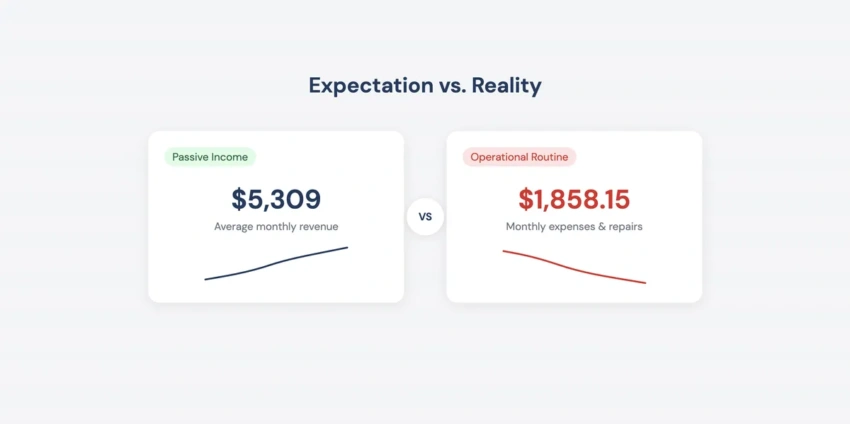
The reality of short-term rentals: high passive income requires professionally managing a complex operational routine and expenses
Based on our experience managing properties in the DR, we at Complete Hospitality Management (CHM) deal with situations like this every day. We understand the hidden struggles of owners. In this article, we’ll break down the 7 sure signs that your current management model has run its course. If you recognize your situation in even a few of these points, there is a solution; it’s safe, and the transition to effective management will be much easier than you think.
1. Financial Performance is Stagnating or
Falling Short of Expectations
The first and most important indicator is net profit. If your property in a high-demand region like Punta Cana generates income each month that barely covers basic maintenance costs, that’s a strong signal that it might be time to change your property management company.
The fixed-fee trap
Many traditional agencies and private managers in the DR prefer to operate on a fixed-fee basis. Under this arrangement, you pay a set monthly amount for them to “look after” your property.
The problem with this model is that the management company has absolutely no incentive. The manager will receive their payment regardless of whether your villa was rented out for 25 days a month or stood empty. They has no incentive to spend time improving their photos, setting up dynamic pricing, or negotiating with guests.
Alternative: a results-oriented partnership
In our experience, the most transparent and effective model is the revenue share model, under which the management company receives a percentage of the actual profit. In this case, the manager becomes your full-fledged partner. If you don’t make money, the company doesn’t either. This motivates the team to fight for every guest every day, analyze the market, and raise prices during periods of peak demand.
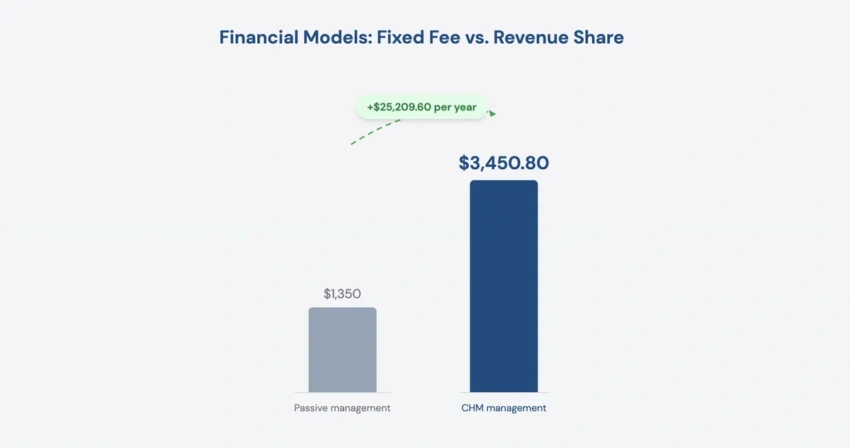
A revenue-share model motivates your manager to fight for every guest every day
To avoid making unsubstantiated claims, let’s take a look at how changing the financial model and implementing active management affect the figures. Based on our experience in Punta Cana, we have prepared a comparative table of results for one of the properties that came under CHM’s management.
Performance comparison: passive management vs. CHM approach
| Financial indicator | Previous management (passive approach) | CHM management (percentage model + automation) |
|---|---|---|
| Property | Penthouse, 3 bedrooms, hot tub (Los Corales, Bávaro) | Penthouse, 3 bedrooms, hot tub (Los Corales, Bávaro) |
| Average monthly revenue | $1,500 | $5,309 |
| Monthly expenses | $150 (base premiums only) | $1,858.15 (including a 30% management fee and system costs) |
| Monthly net profit | $1,350 | $3,450.80 |
| Annual net profit | $16,200 | $41,409.60 |
| The result for the owner | Capital stagnation | A 2.5-fold increase in profits (+$25,209.60 per year) |
Similar results have been observed in other segments as well. For example, after a management change at a small boutique hotel in Bávaro (24 rooms), the occupancy rate rose from 38% to 54%, and the average daily rate (ADR) increased from $48 to $52, resulting in a monthly profit increase of more than $7,000. If your revenue isn’t growing along with the market, most likely, your property simply isn’t realizing its full potential due to a lack of the right strategy.
2. Lack of Transparency in the Calendar
& Suspicions of “Hidden Bookings”
For an owner living in another country, keeping track of what’s happening at their home is a fundamental psychological need. When you log into a platform like Airbnb or VRBO and see that your calendar is blocked for certain dates, but the manager doesn’t provide a clear explanation, it’s natural to feel concerned.
The phenomenon of shadow rent
Unfortunately, in emerging real estate markets, there is a practice known as “hidden stays.” Unscrupulous managers may block dates on official platforms under the pretext of “deep cleaning,” “maintenance,” or “visits from relatives.” In reality, during these days, the property is rented to tourists for cash, bypassing the booking systems.
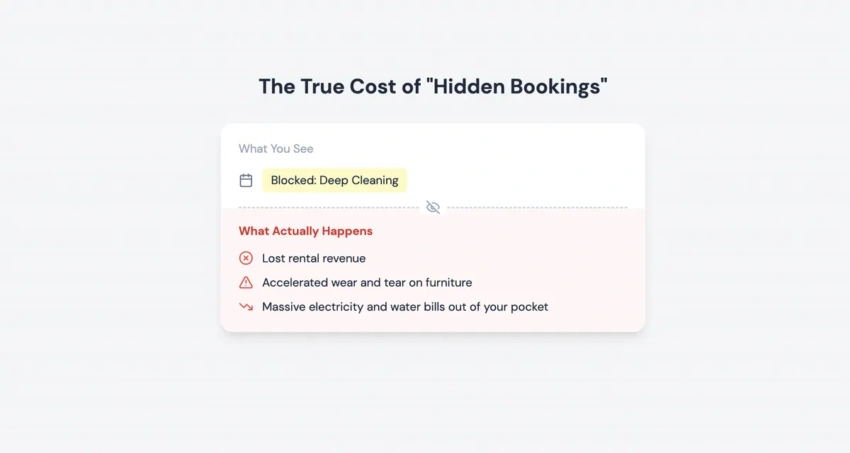
Blocking dates for “deep cleaning” often hides the unofficial renting of your villa
For you, as the owner, this isn’t just lost revenue. Guests staying unofficially make heavy use of the ACs, pool, and washing machine. Furniture and appliances wear out faster, and at the end of the month, you receive massive bills for electricity and water, which you pay out of your own pocket without even suspecting the real reason behind them.
What transparency should look like
You shouldn’t have to settle for a situation where you’re left guessing who lives in your building. In our experience, modern management standards require that owners be provided with a comprehensive digital portal (owners’ portal).
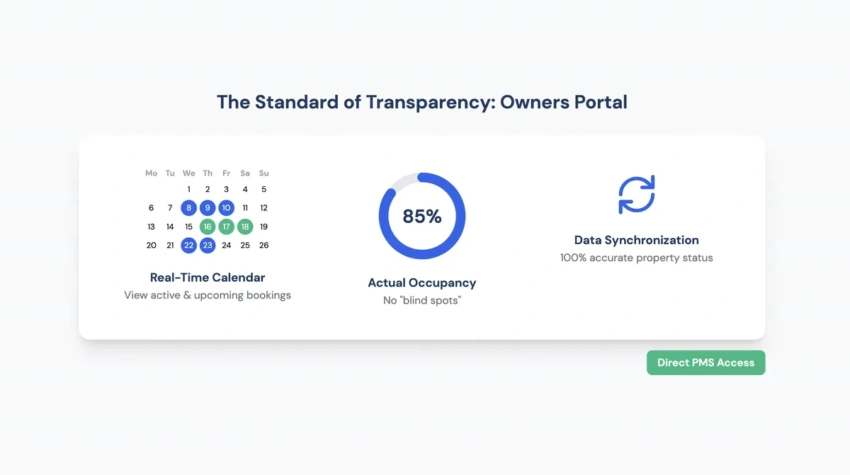
A professional management company provides a comprehensive digital portal with direct PMS access, allowing you to view all active and upcoming bookings in real time
A good property management company gives you a tool that allows you to:
- View all active and upcoming bookings in real time;
- Track your actual calendar occupancy without any “blind spots” or unexplained blockages;
- Synchronize data so that what you see on the screen accurately reflects the actual situation at your villa.
If your current contractor cites “technical difficulties,” refuses to grant direct access to the property management system (PMS), or sends monthly Excel reports late, this is a clear sign that processes are being deliberately concealed, prompting many owners to change property management companies. Transparency isn’t a privilege – it’s your fundamental right as a property owner.
3. Tough Communication As One More “Why” to
Change Your Property Management
Your relationship with the management company should give you peace of mind. You hired professionals precisely to free up your time and relieve yourself of the burden of day-to-day operational issues. However, many owners find themselves thinking that dealing with the manager in the Dominican Republic has become a second job for them.
Signs of a communication breakdown
If you constantly have to be the first to message your agent to check on the status of repairs for a leaky faucet, if your WhatsApp messages go unanswered for days, or if your manager only gets in touch when he needs to request funds for unexpected expenses – that’s not normal. Many owners feel awkward, afraid of seeming too “pushy,” and end up left in the dark.
Standard for proactive communication
Based on our experience managing properties in the Dominican Republic, the lack of updates from the manager doesn’t always mean that “everything is fine.” Effective management is built on proactivity. You shouldn’t have to ask for reports – they should be sent according to a pre-approved schedule.
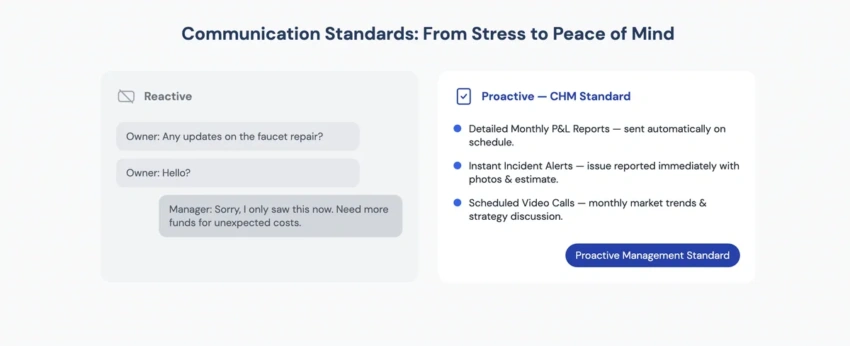
Professional management means receiving detailed monthly reports and alerts before you even have to ask for them
Professional communication includes:
- Detailed monthly reports. You should receive a detailed document (Profit & Loss) that clearly itemizes every cent of income and expenses.
- Incident reports. If appliances break down in the apartment or guests cause damage, you should be informed via an official notice accompanied by photos and a repair estimate, not through an angry review from the next tenants.
- Regular meetings. Reputable companies hold monthly video calls with property owners to discuss results, market trends, and plans for improving the property.
Don’t be afraid to demand a high level of service. You are the customer, and your confidence in the future is the main product that the management company should provide.
4. The Real Estate Market Deterioration
and Steadily Falling Ratings
The Dominican Republic is indeed a tropical paradise, but for real estate, this climate poses a real challenge. High humidity, salty ocean air, the scorching sun, and heavy tourist traffic require constant, meticulous maintenance of the property. If a manager runs your villa exclusively from an office, delegating all tasks to random contractors, the property will deteriorate at an alarming rate.
Warning signs from real-world experience
Based on our management experience in the DR, we know that guests are the first to report service issues. If reviews start appearing on your property’s profile on booking platforms mentioning broken air conditioners, dirty pools, or the presence of insects or mold, the situation requires immediate attention.
Even at the large resort complexes in Bávaro, there are instances where staff negligence leads to serious consequences. There have been reports of tourists complaining that the pools go uncleaned for weeks, turning into a health hazard, and that requests for basic services are ignored. In the private rental sector, the consequences are even more serious.
Poor cleaning and a lack of oversight lead not only to the loss of Superhost status but also to direct financial losses: there has been an increase in incidents of petty theft (missing glasses, guests’ personal belongings) and damage to furniture, for which no one is held accountable.
Reputation management is expensive
In the short-term rental business, your digital reputation is your most valuable asset. A drop in a property’s rating by just a few tenths of a point pushes the listing to the last pages of search results. According to our estimates, restoring a negative online reputation requires at least six months of intensive work, discounts, and concessions to guests, which ultimately costs the owner up to 40% of potential profit during that period.
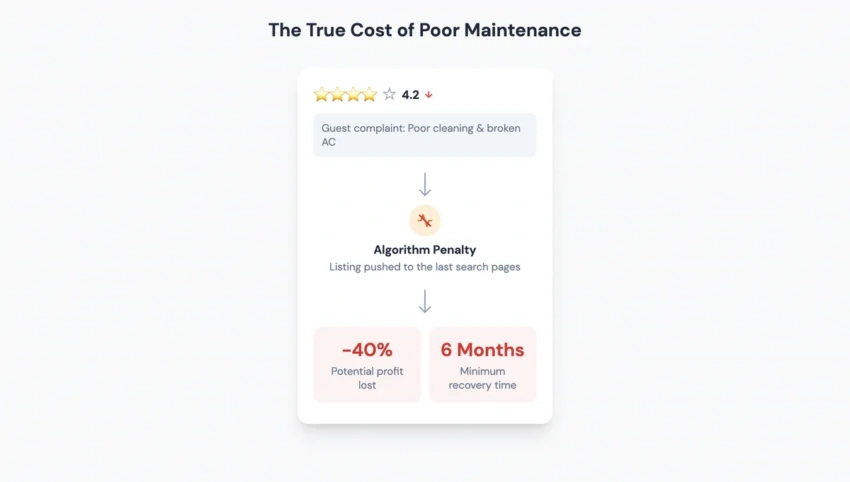
A rating drop of even a few tenths of a point will cost you months of recovery and significant lost profits
A reliable management company addresses this issue systematically. We firmly believe that cleaning service managers should spend at least 80% of their time on-site, personally checking the quality of the cleaning before each guest arrival. If you see from the photos that your villa looks worn out, but the manager assures you that “everything is fine, it’s just normal wear and tear,” it’s time to seriously consider taking action and changing your property management company.
5. Passive Marketing & Technological Backwardness
As Reasons to Change Property Management Company
The world of short-term rentals has changed. By 2026, it won’t be enough to take a few photos with a phone, post them on Airbnb, and wait for tourists to line up. The Punta Cana market is highly competitive: hundreds of new apartments are completed every year, many of which are designed specifically for rental purposes. In this environment, success goes to those who leverage cutting-edge technology that often involves a decision to change a property management company.
Limitations of the “publish and forget” approach
If your management company limits itself to listing your property on just one or two platforms, you’re missing out on a huge share of the market. Such companies rarely use dynamic pricing, don’t analyze the platforms’ search algorithms, and don’t engage in cross-channel marketing.
Hence, during the high season, you lose profits due to underpriced listings, and during the low season, the property is empty.
Proactive technology marketing
In our experience, filling the calendar weeks in advance requires a comprehensive, multi-level marketing approach. Professional property management in Punta Cana today includes:
- Omnichannel distribution. Your property should be listed not only on Airbnb, but also on Booking.com, VRBO, Expedia, and many other specialized websites. All of these are synchronized through a single channel manager to prevent double bookings.
- Direct bookings. Having your own website for your villa is now the industry standard. This allows guests to book directly, saving you from paying hefty platform commissions (which can reach 15.5%), making your listing more attractive and increasing your profits.
- Professional home staging and visual presentation. Hiring in-house decorators and utilizing professional photos and videos (possibly even featuring models) can dramatically transform how a property is perceived. Attractive visuals increase click-through rates (CTR) and help justify a higher nightly rate.
- Social media. Active promotion on Instagram and TikTok, collaborations with influencers and bloggers create an exclusive image for your property.
If your manager isn’t using these tools, you’re essentially handing your guests over to the competition. A comprehensive IT strategy and the integration of reliable payment gateways (Stripe, PayPal) can boost your property’s success rate by 80%.
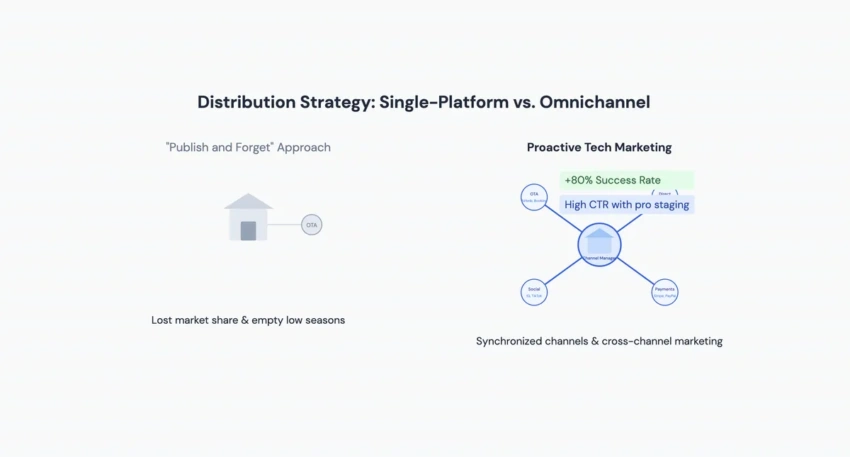
An omnichannel approach and synchronized marketing ensure you do not lose market share or experience empty low seasons
6. Expenses Lack Transparency, and
Legitimate Tax Breaks are Ignored
Short-term rental management inevitably involves expenses, but these should be predictable and reasonable. The DR has own characteristics regarding utility bills and taxation, and a manager’s lack of expertise in these areas could end up costing you dearly. Tax inefficiencies and unclear expenses are additional reasons why property owners decide to change property management partners.
The mysteries of utility bills (CEPM)
In the tourist areas of Punta Cana, Bávaro, and Bayahibe, the CEPM consortium is the sole electricity provider. Electricity here is not cheap, especially if guests leave their air conditioners running around the clock.
The system for dealing with CEPM is unique. When signing a lease for a one-bedroom apartment, the company requires a security deposit of approximately 23,000 pesos (about $400), while for larger properties, the deposit can reach $600. There is a more convenient option: switching to a prepaid system, where the initial payment is only about 3,500 pesos ($60), and account top-ups are handled transparently through a mobile app.
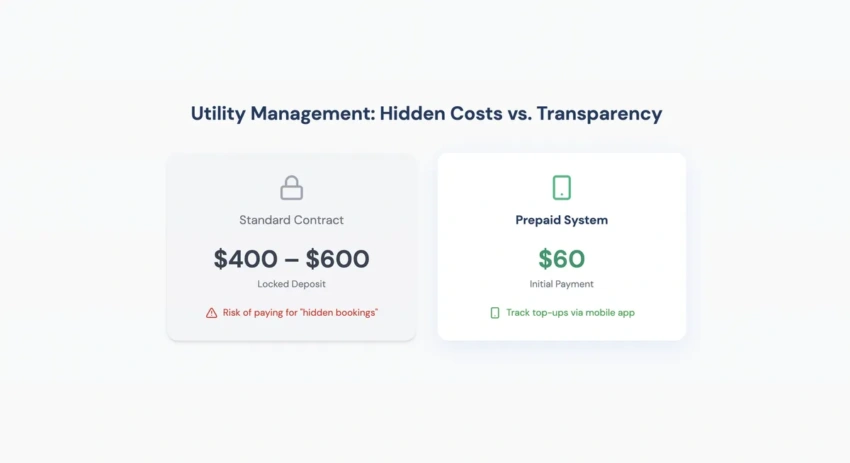
Transparent utility tracking protects you from paying massive electricity bills for unrecorded hidden bookings
Unscrupulous managers often manipulate these accounts: they may inflate deposit amounts, refuse to provide original CEPM receipts, or pass on to you the cost of electricity consumed during “hidden bookings.”
Tax negligence and the CONFOTUR Act
The Dominican Republic’s tax system (DGII) is fairly straightforward but requires a professional approach. Any income earned within the country (including from short-term rentals) is subject to taxation. For non-residents, this tax is withheld at source and amounts to 27% (as of 2025). In addition, there is an annual property tax (IPI) of 1% on the assessed value exceeding the established threshold (approximately $171,843 in equivalent).
However, the main problem lies not in the taxes themselves but in poor managers failing to use legal mechanisms for tax optimization. The government of the DR actively encourages foreigners through the CONFOTUR program (Law 158-01). If your property is located within an approved tourism project, you are eligible for unprecedented benefits.
Why CONFOTUR is important: comparing tax rates
| Tax types in the Dominican Republic | Standard terms and conditions | Terms and conditions for CONFOTUR benefits |
|---|---|---|
| Property transfer tax | 3% of the appraised value at the time of purchase | Full exemption (0%) |
| Annual property tax (IPI) | 1% on amounts over ~$171,000 | Full tax exemption for up to 15 years |
| Tax on rental income | 27% for non-residents (withholding tax) | Possible tax exemption for up to 10 years (depending on the project) |
For example, when purchasing a condo for $250,000, the CONFOTUR tax break allows you to save $7,500 right away on the transfer tax alone. A professional management company should advise you on these matters, assist with paperwork, and ensure that all taxes are paid on time to avoid penalties. If your manager doesn’t even mention these terms, your business is losing money for no reason.
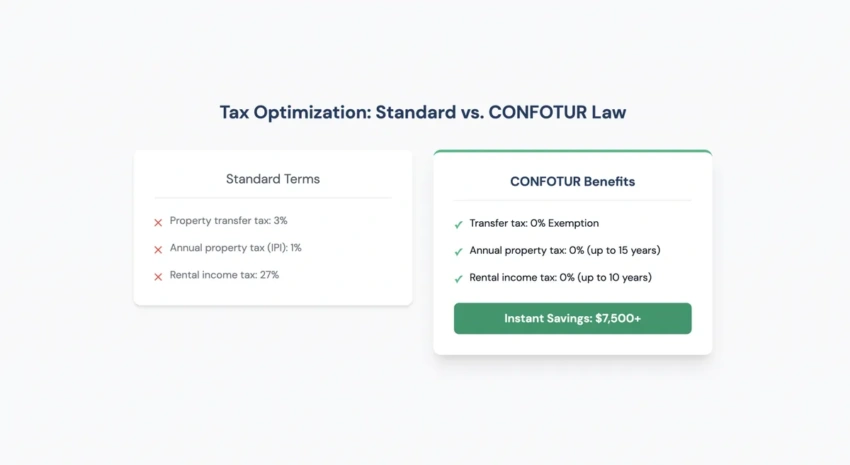
A professional management company should advise you on how to legally save thousands of dollars using CONFOTUR tax breaks
7. Fear Prevents Owners from Changing
Property Management Companies
This is perhaps the most subtle and psychologically challenging sign. Many property owners are aware of all the issues listed above. But the fear of what might happen after you change a property management company often keeps you in unproductive relationships for years. Unscrupulous managers understand this psychology and exploit it, creating the illusion that there is no way out.
The anatomy of fear
They may hint at or directly mention the following “disasters” that will supposedly occur if you cancel the contract:
- “You’ll lose all your New Year’s holiday bookings.”
- “We’ll delete your Airbnb account, and you’ll lose all your reviews and your Superhost status.”
- “You’ll have to pay huge contractual penalties.”
- And even veiled threats of possible vandalism or theft.
We want to reassure you: these threats are nothing more than a bluff designed to take advantage of your lack of knowledge. Based on our experience managing real estate in the DR, we’ve handled dozens of similar transactions. Be sure, there’s a reliable, systematic solution for each of these concerns.
The law is on your side
Under Dominican Republic law, you are not required to remain bound to a management company indefinitely. If you have signed a contract, it typically specifies a standard notice period – usually between 30 and 60 days. In cases where the contract is merely a formality or does not exist at all, terminating it is even simpler.
If the issue concerns the dismissal of domestic staff (such as a maid assigned to a villa), the local Labor Code provides for a clear procedure known as Desahucio (dismissal at the employer’s initiative without cause). Depending on the employee’s length of service, the law requires giving the employee 7, 14, or 28 days’ notice, or paying severance pay equal to that period, plus vacation pay. These are strictly regulated amounts that won’t come as a financial shock to you.
The co-hosting bridge for saving your Airbnb profile
The biggest fear for hosts is losing Airbnb reviews. The platform’s rules do indeed prohibit simply “transferring” an account to another person. But there is a technical solution – the “co-hosting bridge.”
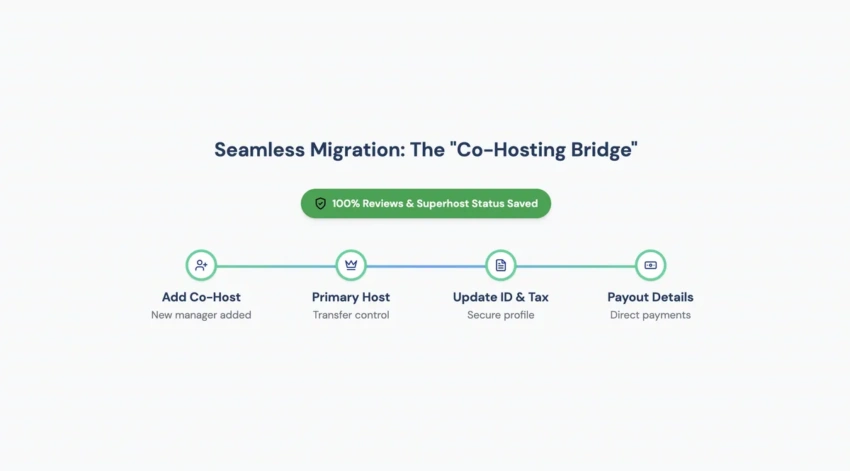
Co-hosting bridge technology to save your rating and Superhost status on Airbnb
The process works as follows:
- The current manager (if the listing is on their account) adds a new manager (or you) as a full-fledged Co-host.
- You are granted “Primary Host” privileges. You begin managing guest communications and the calendar.
- In the profile settings, the previous manager’s documents (Government ID) and tax information (Tax info) are removed. Your information or that of the new management company is uploaded in their place.
- The payout details will be updated. From now on, all payments for future bookings will go directly to your bank account.
- Current bookings will be completed as usual; guests won’t notice a thing. Later, the new manager can create a separate listing marked “new management” and transfer screenshots of the best historical reviews to it.
As for the physical security of your property during the transition period, smart locks and signing strict NDAs with the new contractor will ensure that the former manager loses access to the property the very moment the contract expires.
As a Conclusion
Based on our experience at CHM, switching to a competent, tech-savvy, and transparent partner is a matter of just a few weeks – after which your project’s financial performance will change dramatically. Moving away from passive managers with their fixed commissions in favor of teams that focus on results, utilize automation, and protect your assets through CONFOTUR tax incentives is a natural step in your growth as a property owner.
For many owners, the decision to change a property management company feels overwhelming. In reality, a well-planned transition can be completed smoothly while preserving bookings, guest reviews, and operational continuity. Don’t be afraid to ask questions, demand transparency, and stand up for your interests. You deserve the best service, and your property deserves the highest return.
If you own a property in the Dominican Republic, our expert team is ready to organize a smooth, secure transition and help maximize your passive income.
Learn About Our Management Approach
FAQ on Changing Property
Management in the DR
Can you change a management company?
Yes, absolutely. You are the legal owner of the property, and managing your asset should bring you profit and peace of mind, not stress.
Many owners don’t change managers for years simply out of fear of losing existing bookings or their Superhost status. But changing management companies is a standard and safe business process. If your income is stagnating, reports are late, and the villa’s condition is deteriorating, changing your partner is not only possible but also necessary to protect your investment.
How can I change property manager?
The process of changing managers consists of several logical steps that guarantee the security of your property:
- Find a new company. Discuss the financial model with the new partner in advance (it’s better to choose a percentage of revenue instead of a fixed fee) and sign a contract.
- Notify the current manager. Send a formal written notice of termination of the old contract.
- Transfer digital assets. To avoid losing reviews on Airbnb, use the “Co-Hosting Bridge” method (adding a new team as a co-host and then transferring rights).
- Update bank details. Change your banking and tax information in your booking profiles so that future payments go directly to you.
- Change physical access. On the day your old contract ends, install new smart locks and transfer access to the new team.
How do I get out of a management contract?
It all starts with a careful review of your current contract. Here’s the basic process:
- Check the notice period. Typically, by law (including in the Dominican Republic), you must notify the company 30-60 days before termination.
- Send a formal letter. Do this by email or registered mail to ensure a precise notice date. Even if there’s no contract, written notice is required.
- Consider local laws. For example, if you had a maid assigned to your villa, the local Labor Code (Desahucio procedure) may require a small standard severance payment for the time worked. This is a transparent process, and the new management company should be able to help you organize it.
What is the biggest challenge of a property manager?
The biggest challenge is constantly maintaining a balance between excellent guest service, property safety, and high owner profitability.
In practice, this translates into two things:
- Deterioration management (especially in the tropics). High humidity, salty air, and intense tourist traffic require constant monitoring. Managers must promptly repair ACs, monitor pools, and ensure cleaning quality before guests leave a bad review.
- Technological marketing. Today, snapping a photo on a phone is not enough. Managers must sync calendars across dozens of platforms (Airbnb, Booking, VRBO) via Channel Manager, set up dynamic pricing, and manage omnichannel sales to ensure the property remains occupied during the off-season.
How to negotiate with a property manager?
The main rule is to negotiate as an equal partnership and focus on transparency. Here are the key points to discuss:
- Avoid a fixed fee. Insist on a revenue share model (e.g., 20-30% of profit). This will force the manager to compete for every guest.
- Demand direct access to data. Agree on a digital portal (Owners Portal) where you can see your calendar in real time without hidden blocks or blind spots.
- Agree on reporting standards. Provide for automatic submission of detailed financial statements (P&L) every month in the contract.
- Discuss taxes and expenses. Clarify how the company will optimize your taxes (for example, through CONFOTUR incentives) and how it will manage your electricity bills (ask about the transparent prepayment system CEPM).
What are the 7 qualities of a good manager?
A great property management partner is distinguished not just by the ability to answer guest calls, but by a strategic approach. Here are 7 key qualities:
- Proactivity. They don’t wait for a pipe to leak, but conduct regular preventative maintenance.
- Results-oriented. They operate on a revenue share model (a percentage of profits), so they are motivated to rent out the property more often and at higher prices.
- Technology-savvy. They masterfully utilize channel managers, dynamic pricing systems, and mobile portals for owners.
- Absolute transparency. They provide open access to the calendar and transparent financial reports down to the last penny.
- Attention to detail. They personally or through supervisors check the quality of cleaning before each stay.
- Crisis management skills. They are able to calmly and quickly resolve conflicts with guests, protecting your rating on platforms.
- Financial and legal literacy. Helps optimize taxes (for example, using the CONFOTUR law) and control utility costs.
What is swot in property management?
SWOT is a tool for assessing the potential of your villa or apartment. A professional manager always conducts this before starting work.
- Strengths (S): what sells the property. For example: a gorgeous ocean view, a recent renovation, a jacuzzi on the balcony, Superhost status.
- Weaknesses (W): what drags down revenue. For example: an old air conditioner (consuming a lot of electricity), distance from the beach, poor soundproofing.
- Opportunities (O): growth opportunities. For example: expanding to new booking platforms (VRBO, Expedia), creating your own website for direct sales without commissions, professional staging (decorating).
- Threats (T): external risks. For example: the construction of a new competing hotel nearby, hurricane season, or changes in Airbnb algorithms that could cause the listing to drop in search results.
What is the hardest part of property management?
The most difficult thing is the human factor in a 24/7 environment.
Real estate is unforgiving of weekends. The manager must constantly balance the expectations of the owner, who wants maximum profit, with the comfort of guests, whose air conditioner might break down at 2 a.m. or whose keys might be lost.
Furthermore, managing depreciation is a huge challenge. Particularly in tropical regions, the property deteriorates much faster, and the manager must constantly organize minor repairs to ensure the apartment looks its best for each new guest.
What is the 2% rule for properties?
This is a classic, albeit somewhat outdated, rule of thumb for investors. It states that monthly rental income should be at least 2% of the property’s purchase price.
- For instance, if you bought an apartment for $150,000, then, according to this rule, it should generate about $3,000 in gross monthly income.
An important point! In today’s real estate markets (due to the rapid rise in housing prices), achieving a 2% yield for long-term rentals is nearly impossible. However, in the professional short-term rental industry, with smart marketing and omnichannel sales, it’s entirely possible to approach this figure during peak season.
What are common property management mistakes?
Many owners and inexperienced managers lose thousands of dollars due to basic mistakes. Here are the most common:
- The “publish and forget” approach. Listing your property only on one platform (e.g., Airbnb) and refusing to use other booking channels.
- Flat-fee management. If you pay your manager a nominal $200 per month, regardless of results, they have no incentive to compete for a full calendar.
- Hidden bookings (“shadow rentals”). When an unscrupulous manager blocks dates under the guise of a “spring cleaning” while renting out the property for cash. As a result, the owner receives no income but pays for wear and tear and electricity bills.
- Neglecting minor repairs. A faucet not repaired in a timely manner or a stain on a sofa instantly leads to bad reviews, a drop in ratings, and, consequently, a sharp decline in income.
- Lack of transparent reporting. When the owner does not understand why utility costs (e.g. CEPM) are so high and the actual profit is so low.
Updated on: . Author: